
What is an Option to Purchase Agreement and How Does It Protect You?
Most buyers and sellers sign an Option to Purchase Agreement without really knowing what they are actually signing up for. In the UK that agreement can legally tie you up for as long as 21 years. They are used in residential, business and land transactions and the terms you agree to at the start will regulate all that follows.
Real Estate Agents London explains everything you need to know about how it works, what it includes, its tax rules and legal limits in the United Kingdom.
What is an Option to Purchase Agreement?
If you want to know about OTP in real estate, well, it’s a legally binding contract between a buyer and a seller that gives them the right to purchase a property at a fixed price during an agreed-upon period of time, known as the option period. In exchange for this right, they pay an option fee to the seller.
“Option Agreement: The formal legal contract between buyer and seller.”
The agreement is one-sided in favour of the buyer. It binds the seller and prevents them from selling properties to anyone else during the option period. The buyer, however, is under no obligation to proceed with the purchase.
- It gives the buyer the right, but not the obligation, to purchase.
- The seller cannot sell their properties to any other person within the defined option term.
- Before the option starts, both parties agree on a property price. This is also called an option price or strike price.
- A small upfront payment, often nominal (such as one pound), is required to secure these options.
- If you don’t want to exercise the option in future, you can transfer or assign that right to someone else.
“During the option period, the seller can’t sell the property to anyone else, but you don’t have to buy it if you don’t want to. That’s why it’s called an option. It provides you with the choice, not the obligation, to purchase anything.”
Exercising OTP in Real Estate
If the buyer decides to proceed, they formally exercise the option by serving a written notice on the seller within the agreed timeframe. The parties then exchange contracts and move towards Real Estate transaction completion in the usual way under English and Welsh conveyancing law. The option fee buyer paid at the outset is counted towards the purchase price or deposit, depending on what exactly the agreement specifies.
But if they don’t exercise the option before it expires, it will be void. Then, the seller is allowed to keep the charge and is also free to sell their property to anybody else.
| The exercise date is the time period during which the option holder can choose to exercise the option and proceed with purchasing the property. |
Option Agreement vs Pre-Emption Right
Sometimes, buyers mix up property option agreements with Pre-Emption Rights or the Right of First Refusal. However, these two are totally different legal arrangements, even with different levels of control and rights, especially for the buyer.
A Right of First Refusal (Pre-emption) means that you can’t start the sale process. Instead, it only gives you the first chance to buy if the seller decides to sell their house. Here’s an overview:
| Feature | Property Option Agreement | Right of First Refusal (Pre-emption) |
| Simple Meaning | The buyer has the right to buy the property within an agreed period. | The buyer only gets the first chance to buy if the seller decides to sell. |
| Who Has More Control? | Buyer | Seller |
| Can the Buyer Start the Sale? | Yes | No |
| Sellers Obligations | The seller has to sell if the buyer exercises the option properly. | If the seller doesn’t want to sell, you can’t do it. |

How Option Agreements Work
Option agreements are most common in land and development transactions where the buyer needs time to obtain planning permission before committing to a full purchase. They are also used in commercial property deals and, less commonly, in residential transactions.
Once an option is granted, the buyer has to fulfill 2 obligations during the fixed option period:
- Serving a price notice to the landowner which eventually initiates price negotiation.
- Serving an Exercise notice to finish the purchase of the desired site.
How to Determine Purchase Price?
A price is generally based on the market value with a discount that both sides mutually agree on. In some cases, other factors like deductions for planning costs, professional fees, and the option fee may also influence the final price.
However, when the land isn’t sold through open market bidding, following metrics can also be assessed to set a better rate:
- Development costs
- Builder profit margins
- Local market conditions
- Comparable land sales
What If There’s a Price Dispute?
If both parties disagree on price, you can hire an independent expert or arbitrator (often through RICS) to decide the final value.
| The option fee, option period, purchase price, exercise notice, and conditions, such as planning permission, are all important aspects of an Option to Buy Agreement. But the exact terms can vary, so you should always check the details, like the pricing formulas, planning criteria, notice requirements, and legal obligations, before you sign. |
Conditional vs Unconditional Option Agreements
It is vital to understand the difference between these two forms of agreements as it might directly or indirectly effect tax rules, legal registration and option timelines. So be sure you understand which form of agreement you are signing.
A conditional option agreement means the buyer can only buy the property if they meet a specified condition first, that is, usually planning permission. They’re not allowed legally to even begin the purchasing procedure unless they acquire an approval
The other side, with an unconditional option agreement you are able to buy the property any time you like without having to wait for any conditions to be satisfied, during the agreed option period.
All you have to do is decide when you want to make a move towards homeownership, and deliver the necessary notices.
| Feature | Conditional Option Agreement | Unconditional Option Agreement |
| Buyer Can Buy When? | After fulfilling specific conditions. | At any time during the option period. |
| Common Trigger | Planning permission approval. | No trigger needed. |
| Buyer Flexibility | Lower | Higher |
| Common Use | Strategic land and development deals. | Standard property transactions. |

What does a Purchase Option Agreement include?
An Option to Purchase (OTP) agreement provides you all the information you need to buy and sell a home. It makes it easy for the buyer and seller to know what are their rights and duties which undoubtedly reduces the chance of disagreements. Generally it has the following:
Information about the buyer and seller
The contract clearly states who is involved in the deal. This contains their entire names, residences, and contact information.
It’s important to clarify that the seller is the legal owner of the property.
Property Details
The agreement should specify the property being sold. This includes the whole address and basic information like size and condition. It may also inform you if the property is vacant or available for rent.
The price that was agreed upon
The document shows that both sides have agreed on a price for the property.
Option Period
This is the moment the buyer has to decide whether they are going to buy. In the UK this time range is usually agreed by both parties. However, it can change depending on the arrangement.
Reservation Fee (Option Fee)
The buyer pays a fee for the privilege of purchasing the property. The cost demonstrates you are serious and may or may not be refunded depending upon the arrangement.
Use of the Option (Payment at the Completion Stage)
If the buyer agrees to continue with the deal, they confirm the purchase and pay the rest of the deposit or sum as part of the contract.
Rights and Responsibilities of Both Parties
This clause describes what both parties are required to do or are liable for.
- The seller agrees not to sell the property to another party during the option period.
- The other hand, the buyer, has the right to close the purchase within the agreed time.
| When making these agreements, especially for commercial properties or development sites, it is very important to work with qualified property lawyers because there can be disagreements over planning, price, and terms. |
Option AgHow Much Does an Option Agreement Cost?reement Time Limits and Exercise Rules
Some OTP laws explain the legal duration of an option and how a buyer can use or exercise an option.
Option agreements have legal time limits.
Most of the time, an option to buy agreement is granted for a specified period and in many circumstances, it can’t legally last more than 21 years. It may not be enforced if
- It runs longer than agreed period
- Doesn’t have a clear end date
Even if the option can only be used after planning permission has been approved, the legal time limit for the option still applies. That doesn’t remove or extend the rule.
Plus, the option agreements should be registered with the Land Registry so that it is legally enforceable and protects the buyer’s rights.
The option must be exercised appropriately by the buyer.
If the buyer intends to go ahead with the acquisition, he must give proper notice to the seller. The notice shall be the same as the original agreement. If you update it or add other terms, it may not be valid.
What Happens If The Option Period Ends?
If you do not buy the property before the option time ends, the agreement will automatically terminate. The seller is then allowed to keep the option fee and can sell the property to anyone they want as well. Because you lose all rights to the property after the deadline.
If the option was registered at the Land Registry, it should also be removed after it expires. In any case, if it is not removed, it can cause problems for the seller when they are selling or getting a mortgage.

Can An Option Be Transferred To Someone Else?
Well, it depends on the deal. Some option contracts allow the buyer to assign or sell his rights to someone else. This can be very important in development negotiations. Other contracts may not allow this, such that only the listed purchaser has the exclusive right to use these options. If the transfer is not permitted and the buyer attempts to do so, it may not be valid for any form of deals
So, it is important to check the agreement before signing, especially if you want to bring in a partner or sell your rights later.
Types Of OTP Agreements
There are two kinds of options to buy:
- The Call Option
- The Put Option
Call Option
This is the buyer’s right, but not the responsibility, to purchase the property at an agreed-upon price (the exercise price) within a set period of time. They normally pay a non-refundable option fee to the seller for a call option.
Once the call option is signed, they get an immediate fair interest in the land.
- If the land is not registered, the buyer must safeguard this interest by registering a Class C (iv) land charge.
- If the land is registered, the buyer must protect it by posting a notice.
“Call Option: The buyer’s right to purchase the property in the future.”
Put Option
A put option works opposite to a normal buy option agreement. It gives the seller the right to compel the buyer to buy the property at an agreed price. If they use this right by giving a valid notice, in this case, the buyer must complete the purchase and cannot refuse.
A put option is usually given in exchange for a non-returnable option cost that the seller pays to the buyer. You can’t protect these options by registering them at the Land Registry because they don’t provide you an interest in land.
- The person who gives the option is called the “optioner” or “grantor”.
- The one who gets the benefit is called the “optionee” or “beneficiary”.
During the option period, the seller can’t sell the property to anyone else. They have to sell it to the buyer they signed a contract with and for the price and terms that were agreed upon. However, they are only allowed to sell the property to someone else if they don’t want to buy it anymore or the option period ends.
“Put Option: The seller’s right to require the buyer to purchase the property under agreed conditions.”
What are the Benefits of an Option Agreement?
There are a lot of good things for both the landowner and the buyer or developer:
For Landowners
- A landowner can make sure the final price is fair. Even if the property’s value goes down before the option agreement ends, the seller won’t be affected.
- The price agreed will be the same as stated in the agreement.
- During the option period, the property owner can still use the property.
- The buyer or owner is responsible for paying for any planning approval or surveyors they need during the option period.
For Buyer/Developer:
- A buyer or developer can lock in the final price. They pay the agreed price for the property, even if its value goes up during the option term.
- During the option period, a buyer or developer has time to hire architects and surveyors, apply for planning permission, or secure the necessary financing, whether through traditional commercial loans or other funding routes.
- It gives the buyer peace of mind, particularly for those still weighing whether buying is the right move, as the seller cannot sell the land or property to anyone else.
- They can feel protected against market fluctuations because the price is set in advance.

What Are the Risks of an Option to Purchase Agreement?
Option agreements carry real risks for both parties. Understanding them before you sign is not optional.
Risks for Buyers
- The option fee is usually non-refundable, so you lose it if you don’t proceed.
- Planning permission may be refused, that means you lose time and money spent on applications.
- If the option is not properly registered, another buyer could take your rights.
- Small mistakes in the exercise notice (wrong timing or format) can cancel the option.
- Property prices may become higher or lower than market value over time.
Risks for Sellers
- You cannot sell the property to anyone else during the option period.
- If the buyer becomes insolvent, removing the legal registration can be difficult.
- Poor pricing terms may force you to sell below market value.
- With a put option, buyers may delay completion by challenging legal notice issues.
What Are the UK Tax Implications? (SDLT, CGT, VAT)
Property option agreements in the UK are treated differently from financial derivatives or stock options. The tax rules below apply specifically to land and property transactions.
Stamp Duty Land Tax
- In England and Northern Ireland SDLT may be charged on the grant of an option.
- The option fee is treated as chargeable consideration, so tax may apply depending on the amount paid.
- When the option is later exercised, and the property is purchased, SDLT is charged again on the full purchase price.
- In some cases, tax paid on the option fee can be offset against the final SDLT bill.
In Wales, Land Transaction Tax (LTT) applies, and in Scotland, Land and Buildings Transaction Tax (LBTT) applies. These follow similar principles but use different rates and thresholds.
Capital Gains Tax (CGT)
The option fee received by a seller is a capital receipt. It is not the Seller’s income. It becomes payable on exercise of the option and completion of the sale, with the option fee being part of the proceeds of the overall disposal.
If the option expires and is not exercised, the fee will be taxed as a separate capital disposal in the tax year in which that is received. The CGT annual exempt amount and appropriate selling rate will apply.
If the buyer does not exercise the option but instead assigns or sells it on to a third party, any profit they make will be a taxable gain for CGT purposes.
VAT on Commercial Option Agreements
Where the option relates to commercial property and the seller has opted to tax the land, VAT at the standard rate of 20% may be chargeable on the option fee. This can affect the cost of agreeing and should be confirmed with a tax adviser before you agree to terms.
Income Tax for Landowners
If HMRC treats an option fee as income rather than capital, for example, where a landowner grants options habitually as part of a trade, the receipt may be taxable as income rather than a capital gain. This distinction can significantly affect the effective rate of tax, so specialist advice is important for landowners receiving option fees regularly.
If you want to estimate how these gains or deductions affect your overall tax position, our income tax calculator can give you a useful starting point.
| This is general information only and not tax advice. Always consult a qualified tax adviser or property solicitor before entering into an option agreement. |
How Much Does an Option Agreement Cost?
The costs involved are generally split into 2 categories: the option fee paid to the seller, and the professional fees for drafting and reviewing the agreement.
Option Fee
The fee varies widely depending on the type of transaction. In residential deals, it may be nominal, sometimes as low as £1. In commercial or development transactions, it can be tens of thousands of pounds, often calculated as a percentage of the agreed purchase price.
Legal Fees
A specialist property solicitor will charge to draft or review an option agreement. Costs range from £1,000 to £5,000, depending on the complexity of the transaction and the firms involved.
Development or strategic land option agreements with complex pricing formulas and conditions will cost considerably more to draft properly.
How to Get an Option Agreement Drafted in the UK?
Option agreements are not standard documents. Every deal has different conditions, timescales, and risk profiles, and the drafting must reflect that.
You should instruct a solicitor who specialises in property or real estate law, not a general high street firm, unless they have demonstrable experience in option agreements and land transactions.
Before instructing a solicitor, it helps to have heads of terms agreed with the other party. This is a non-binding document that sets out the key commercial points, including the option fee, option period, agreed price or pricing formula, and any conditions. The solicitor then turns this into a legally binding agreement.
Both the buyer and seller should instruct their own independent legal representation. Sharing a solicitor in an option agreement can possibly create a conflict of interest and is not advisable.
Option Agreement vs Lock-Out Agreement
These two legal tools are commonly misunderstood, although they act very differently.
A lock-out agreement, also known as an exclusivity agreement, stops the seller from negotiating with other buyers for a fixed period.
- Usually lasts 4 to 12 weeks
- Does not give the buyer any right to purchase the property
- Gives time for due diligence and financing
- Protects the buyer from competing offers during the period
An option agreement is more powerful. It gives the buyer a legally enforceable right to buy the property within a set option period.
- The buyer can choose when to proceed by exercising the option
- Creates a stronger legal position than a lock-out agreement
- Can often be protected by registration against the property title
- Gives control over whether the sale happens within the option period
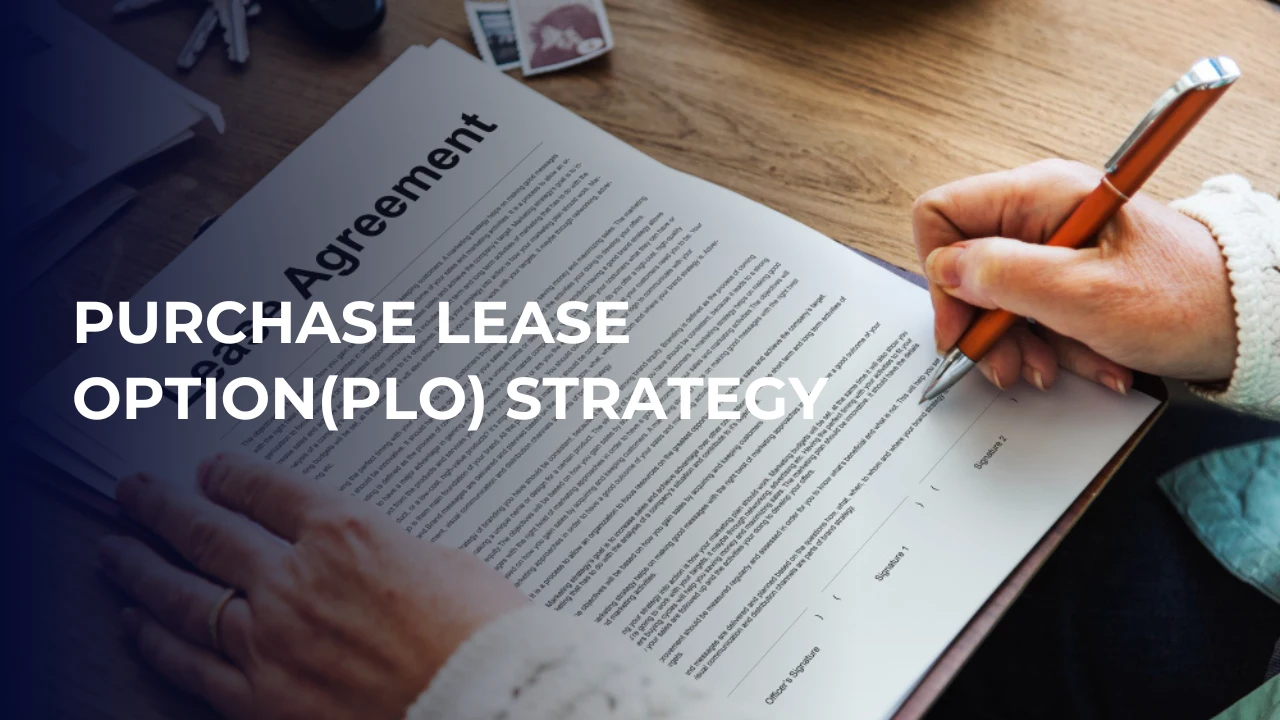
Purchase Lease Option(PLO) Strategy
A Purchase Lease Option (PLO) is like a Purchase Option, except it also includes a lease. You pay the property owner every month, and in return, get the right to use the property.
For instance, you buy a property worth £200,000 for a set amount, pay a small option fee and take over responsibility for the mortgage payments. Even if the property is technically still in the owner’s name, you can use and control it for the agreed-upon time period, such as five years.
You are in charge of the property, paying for its upkeep, and using it, while the owner no longer has to worry about it on a daily basis.
Why Would A Seller Agree?
There are a few reasons why sellers might choose this option:
- They want to sell but haven’t found a buyer yet, and aren’t sure if this is the best time to sell or maximise their return on the open market.
- They prefer steady rental income instead of selling immediately.
- They want to pay less in taxes.
- They are facing financial pressure or repossession.
- They want to delay selling due to penalties or timing issues.
“So, with a Purchase Lease Option, the main benefits for you are that you can earn cash flow and grow equity from a property you don’t even own right away. You just need to manage it and follow UK rental rules and regulations.”
Final Verdict
An Option to Purchase Agreement gives buyers the right to buy a property at a set price without having to pay for the whole thing right away. There are different types of options, such as a call option where the buyer secures a future purchase, a put option for sellers to force a sale, or a Purchase Lease Option that allows income generation before ownership transfer.
This structure protects both sides, as sellers are sheltered from market volatility and purchasers have more time to secure funding, planning approval and perform their due diligence. Just make sure the terms are right before you sign.
If you are looking to buy property or manage a wider portfolio, our property asset management service can help you make the most of properties secured through option agreements.
Frequently Asked Questions
Yes, Option Agreements are legally binding contracts in the UK between buyers and sellers.
The buyer has to pay for the Option to Purchase, not the seller. When the buyer signs the agreement, they normally pay an option fee, which is usually around 1% of the purchase price.
If a buyer decides to back out, the outcome depends on where the deal is at that point. If the offer was “Subject to Contract,” the deposit is normally returned. But if the Option to Purchase has already been signed and sent out, the option fee is forfeited.
By clearly defining the legal terms, planning conditions, pricing method, and notice procedures in the agreement, you can protect OTP agreements.
No, Most OTPs don’t allow the sellers to back out of the deal without any penalty after their OTP has been used. Because buyers have the right to sue to force the sale.
Our Agents

Adil Saleem

Qaiser Masood

Rizwan Ashraf
Leave a Reply