
What is Gazumping & Gazundering? Tips On How To Avoid Being Gazumped
Market Financial Solutions in 2024 revealed that 37% of buyers in England and Wales had been gazumped. As a result, the buyers lost an average of £2,400 in costs that they could not get back. It’s legal in the UK, as long as the seller hasn’t exchanged contracts. However, many buyers and real estate agents think Gazumping is wrong or unethical.
You can make yourself less vulnerable to gazumping by knowing the timeline, planning carefully, and hiring reputable Real Estate Agents London. This guide explains what is gazumping and why it happens.
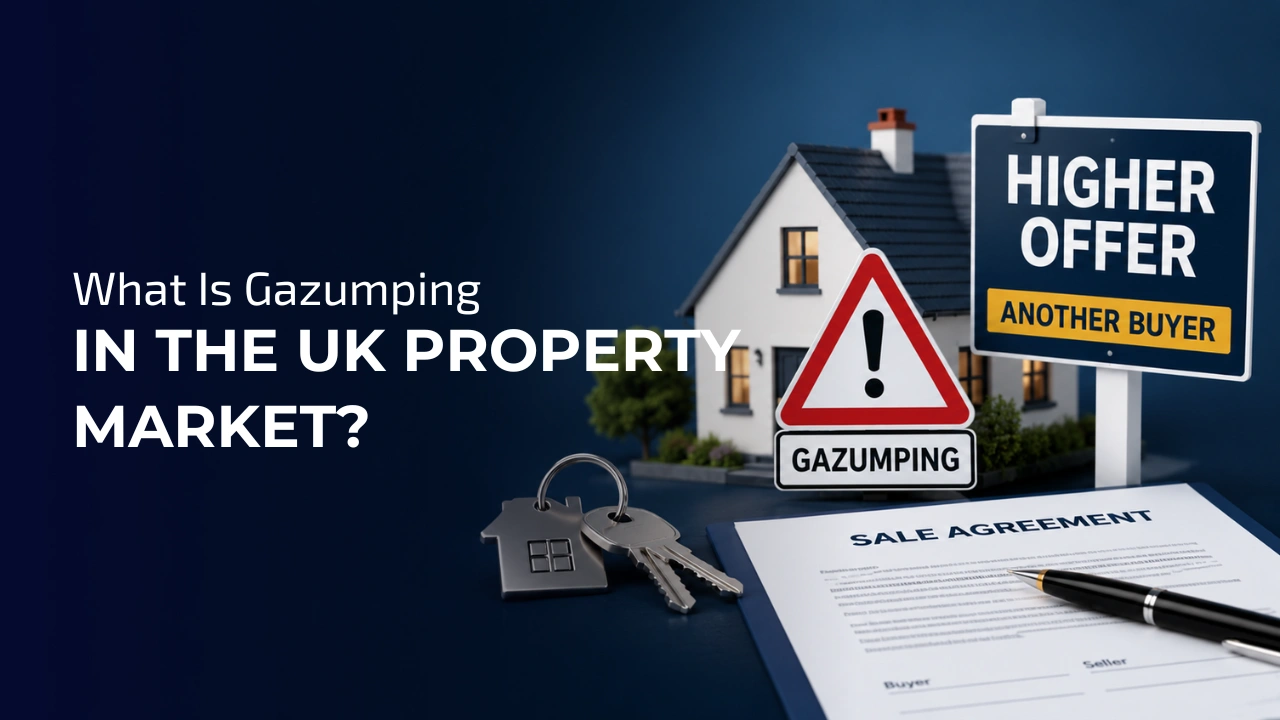
What Is Gazumping in the UK Property Market?
This word is used in the real estate market, mainly in the UK. It’s when a buyer makes an offer on a house, but before the deal is finalised, the seller accepts an offer from another buyer that is much higher.
The majority of the time, it takes place between verbal acceptance and contract exchange. It can take up to three months for written contracts to be signed after the first verbal agreement. The reason is that the buyers usually need time for surveys, mortgage arrangements, and legal checks. If it gets delayed, the seller may change their decision during this period.
Until this stage is reached, you are at risk of being gazumped and losing any money you have spent on fees. In most cases, you can’t even refund expenses if the sale falls through.
| Sometimes, it can also mean a seller asking for more money at the last minute after verbally agreeing to a lower offer. |
How Gazumping Works
- Initial Offer: A buyer submits a serious offer on a house, which the seller accepts.
- No Legal Agreement Yet: At this stage, there’s no legally binding contract. The seller may still accept other offers.
- Higher Bid: Another buyer comes forward with a more attractive offer, usually higher in value or better terms.
- Seller Chooses the Better Offer: The seller can legally accept the new, higher offer, even if they’ve already agreed to the first one.
- Original Buyer Loses Out: The first buyer is left disappointed and may have to start the process again elsewhere.
| How common is gazumping today? It still happens in the UK property market, but it’s not that common. It is particularly common in busy or competitive property markets, when numerous buyers are competing for the same home, or demand for properties is high. In slow or normal markets, it’s less common. Overall, it doesn’t stay constant because it totally depends on market conditions. |
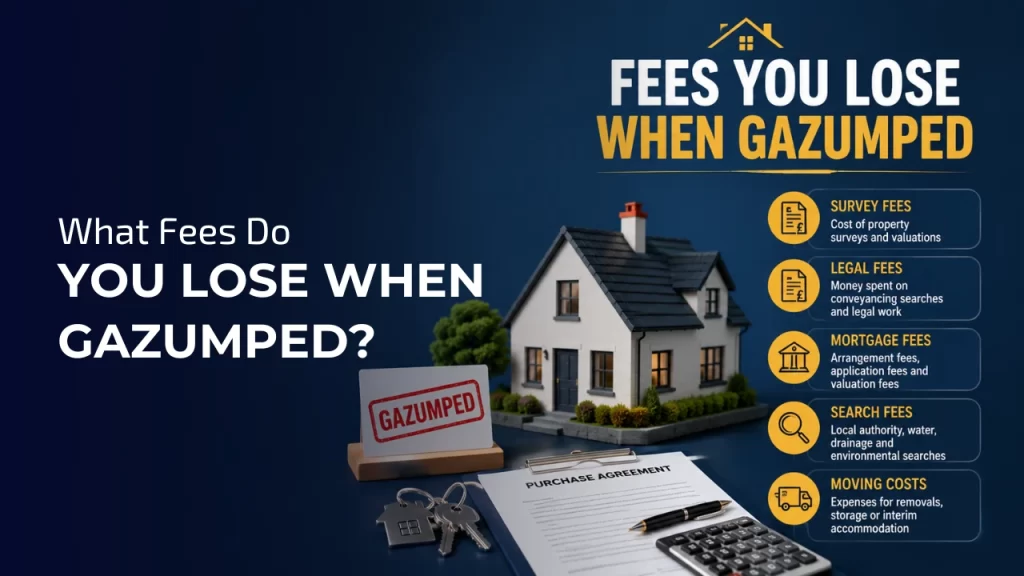
What Fees Do You Lose When Gazumped?
Buying a property is not that simple. There are many costs involved, and if you get gazumped, you may end up paying for unnecessary expenses. Here’s a table showing the different costs a home-buying process includes and a rough breakdown of how much money is at risk.
| Cost | Approximate Amount |
| Homebuyer survey (RICS Level 2) | £400 – £900 |
| Solicitor/Conveyancer Fees | £300 – £600 |
| Mortgage Valuation Fees | £150 – £300 |
| Local Authority Searches | £250 – £450 |
| Mortgage Arrangement Fee | £500 – £1,000 |
Buyer protection insurance, also called homebuyer protection insurance, can cover some of these losses if you are unable to complete a sale transaction.
What To Do If You Are Gazumped
No one likes the fact that they are being gazumped, but if it happens, first of all, stay calm and check other options before taking the next step. Here’s what you can do in this situation:
Start by checking your finances. If you have room to go higher and increase your offer, submit a counteroffer. Just make sure you do not offer more than you are genuinely comfortable paying.
If a higher offer is not possible for you, it’s better to communicate directly with your seller:
- Let them know you are really committed and ready to purchase property
- Show flexibility around their preferred timeline or completion date
A seller who already knows you and trusts the process may think twice after this before switching to a new buyer they know nothing about.
Of course, there are no guarantees. If the seller goes with another buyer, follow these steps immediately to control further financial losses:
- Tell your solicitor to stop all ongoing work to avoid adding more costs
- Check whether you have homebuyer protection insurance
- Contact your provider and start the claims process if you have coverage
| What is Gazumping Insurance? Home buyers protection insurance, that is also known as home buyer insurance or gazumping insurance, is a one-time policy. It covers certain upfront costs if, by any chance, your property deal fails for reasons that are not under your control. It may include refunds for things like legal (conveyancing) fees, property survey costs, search fees, and some mortgage-related charges. This type of cover is designed to control financial risk and make the homebuying process easier. |

Is Gazumping Legal in the UK?
Yes, in England and Wales, gazumping is completely legal. It’s allowed because there is a delay between offer acceptance and contract exchange. During this period:
- If the seller says yes to your offer, the agreement is only “subject to contract”.
- No legally binding agreement exists between the two parties yet
- The seller can receive and accept higher offers
- Property surveys, mortgage approval, and legal checks are still ongoing
- The process can take several weeks or even months
Because of this gap, if another buyer steps in with a higher offer, the seller may choose to switch, resulting in gazumping.
| Country | Is Gazumping Legal? | Why? |
| England | Yes | No binding contract exists until contracts are exchanged. |
| Wales | Yes | Uses the same property purchase system as England. |
| Scotland | No | Uses a binding missives system, making gazumping uncommon |
| Northern Ireland | Yes | Follows a process similar to England and Wales. |
| Why is Gazumping legal? If you accept an offer in the UK, you don’t have to follow terms of the offer until you exchange contracts. Until then: There is still a chance that the seller will take another offer.The first buyer is not obligated to do anything.If someone bids more than the buyer, the buyer can’t sue for breach of contract. |
Does Gazumping Happen in Scotland?
The strong legal structure is the main reason gazumping is uncommon here. The property system becomes legally binding much earlier than in England and Wales. Buyers make offers through solicitors, and sellers set a closing date for all written bids.
After considering the offers, the seller’s solicitor issues a written acceptance, which immediately finalises the agreement and makes it legally binding in no time.
No one is allowed to back out after this without legal penalties. If they still tried to accept a higher offer after a written acceptance has been given, their solicitor is not allowed to act, as it would go against professional conduct rules set by the Law Society of Scotland.
- Buyers often submit offers “subject to survey” before final acceptance
- Solicitors act on behalf of both buyer and seller in the process
| What is “Subject to Contract” or “Subject to Survey”? Subject to contact means the sale is not legally binding until buyers and sellers sign and exchange final contracts. Anyone can back out of the deal until this is completed. Subject to survey, on the other hand, means the buyer’s offer depends on the property survey result. They can negotiate the price or decide not to continue the purchase further if there are any major issues or repairs. |
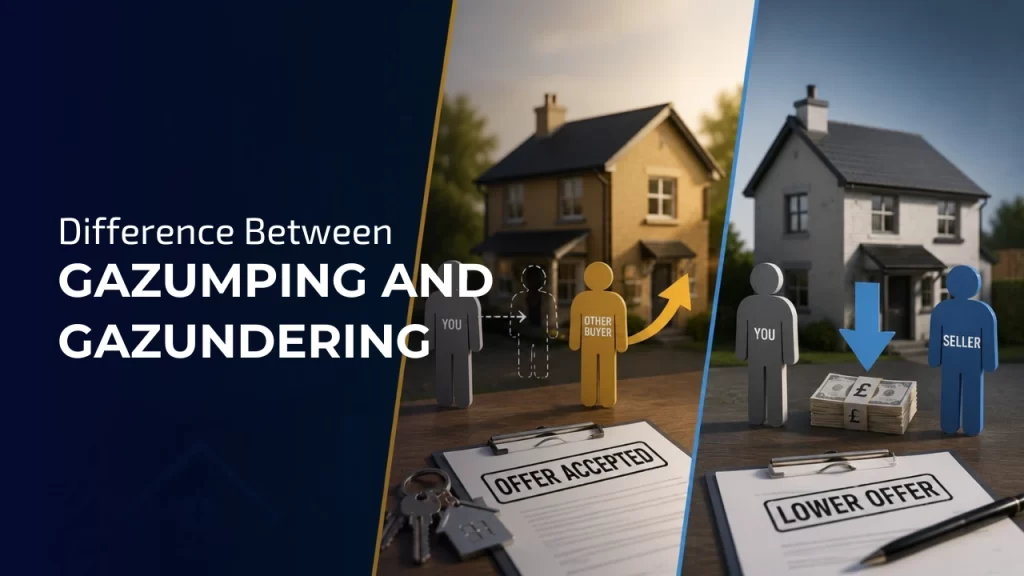
Difference Between Gazumping and Gazundering
Both Gazumping and gazundering are legal, but they are commonly seen as unfair practices or unethical among buyers and sellers.
Gazumping is when a seller accepts a higher offer from a new purchaser after already agreeing to sell the property to someone else. Gazundering is the totally opposite. A buyer reduces their offer just before completing the sale and pressures the seller to accept a lower price. Both are legal, but they affect each party differently.
| Gazumping | Gazundering |
| Done by the seller | Done by the buyer |
| Seller accepts a higher offer from someone else | Buyer lowers their offer just before the exchange |
| Usually happens in a rising market | Usually happens in a falling market |
| Legal | Legal |
When Does Gazumping & Gazundering in Real Estate Happen?
Gazumping is more common in a rising market when sellers believe they can get a higher price. Gazundering, on the other hand, usually happens in two situations:
- When property values fall between the initial agreement and completion
- Just before contracts are signed, when the buyer feels the seller is under pressure, especially in a property chain
How to Protect Yourself from Gazumping & Gazundering
No law in England and Wales stops gazumping or gazundering from happening. But these are a few steps you can take to reduce the risk on both sides, either buying or selling.
Protecting yourself from gazumping:
- Tell the seller to take the property off the market once your offer is approved
- Get a mortgage decision in principle before you put in an offer
- Contact your solicitor on the same day the seller accepts your offer.
- Book your survey and search within the first two weeks of the purchasing process.
- Ask your estate agent whether they have a policy of rejecting fresh bids after acceptance
Moreover, speed is your best protection against gazumping. It now takes an average of five months to complete a property deal in the UK, a 38% rise over the last decade. That means the longer the process takes to complete, the more time there is for another bidder to come with a higher offer than yours.
So remember, speed up the process because once you exchange a contract, no one can change terms or reject your offer without mutual agreement.
Protecting yourself from gazundering:
- Try to have a few interested buyers before agreeing to a transaction.
- Keep the buyer continually updated throughout the process.
- Do not get into additional financial commitments until contracts are exchanged
The 2024 MFS report found that 26% of buyers admitted to gazundering a seller late in the process. In these situations, If a buyer drops their offer, why they did that’ or ‘why they lowered their offer. Maybe they have genuine reasons to do so. Because 27.3% of failed transactions in 2024 were due to just a bad survey result.
How to Avoid Gazumping as a Buyer
You cannot stop gazumping entirely, but you can avoid it. Most buyers who get gazumped have one thing in common: they move too slowly. Here is what to do differently to avoid this:
Sort your mortgage before start viewing
Get a mortgage in principle before you make any offer. It shows the seller you are financially ready and not just browsing.
Buyers without preplanning are easy to replace, and sellers know that.
Line up a solicitor and surveyor early
Do not wait until your offer is accepted to start looking for a conveyancer. The same goes for a surveyor. A survey can take around five to six days after inspection, sometimes a bit longer depending on the property. So the sooner you book it, the better it would be for you.
Ask seller to take the property off the market
There is no legal obligation for them to do this, but many of them will agree if you ask. Give them less reason to keep the listing active by showing them that you are serious about purchasing the property.
Other common ways include:
- Request a lock-in agreement
- Try to understand what the seller actually wants
- Be flexible where you can because sometimes buying is not just about price.
- Work around the seller’s preferred moving date or show
- willingness to negotiate fairly
How to Avoid Gazundering as a Seller
Gazundering can also be frustrating sometimes, just like Gazumping, and it can even collapse an entire chain. Take these steps to reduce the chances of it happening to you.
Price your property correctly
If you overpriced property, it can attract buyers who later use the survey or market conditions as an excuse to push the price down. So get a professional valuation and price it fairly from day one.
Pre-contract deposit request
When a buyer’s offer is accepted, you can ask for a pre-contract deposit for your protection. Because they’ll lose it if they try to reduce their offer later without a good reason.
Use a lock-in contract
A lock-in agreement is a legally binding contract that commits the buyer to proceed at the agreed price for a fixed period. It removes much of the uncertainty during the negotiation stage.
Pick the right estate agent
Not all agents are the same. Some are good at listing properties. Others are good at actually getting sales over the line. You want the second type. Look for someone with a genuine track record of completions, not just valuations.
| Can I sue a seller who gazumps me? No, you can’t do that because they are not breaking any law or breaching a contract if the agreement between you two is only verbal. However, if you exchange contracts in writing and they back out just before deal completion, then you can take legal action against them. |
Final Verdict
It is vital to understand gazumping if you are thinking of buying a house in London. It is legal in England and Wales before contracts are exchanged, so buyers should be careful throughout the buying process.
By knowing what causes gazumping and how to avoid it, you can protect yourself from unexpected problems and make better property decisions with confidence. We can even help you to prevent problems such as both gazumping and gazundering with our Buy Property and Sell Property services, and to complete your deal smoothly.
Our Agents

Adil Saleem

Qaiser Masood

Rizwan Ashraf
Leave a Reply