
Compare Types Of Variable-Rate Mortgage (Standard, Tracker, Discount)
Which loan option in the UK has payments that change without remortgaging or paying any fees? There are many options available, but the monthly payments on variable-rate mortgages can rise or fall automatically when the interest rates shift.
Homeowners don’t need to switch multiple lenders or pay extra costs to take advantage of these falling rates. This guide from Real Estate Agents London explains how these mortgages work in the UK and compares three main types to help you decide if this option is right for you.
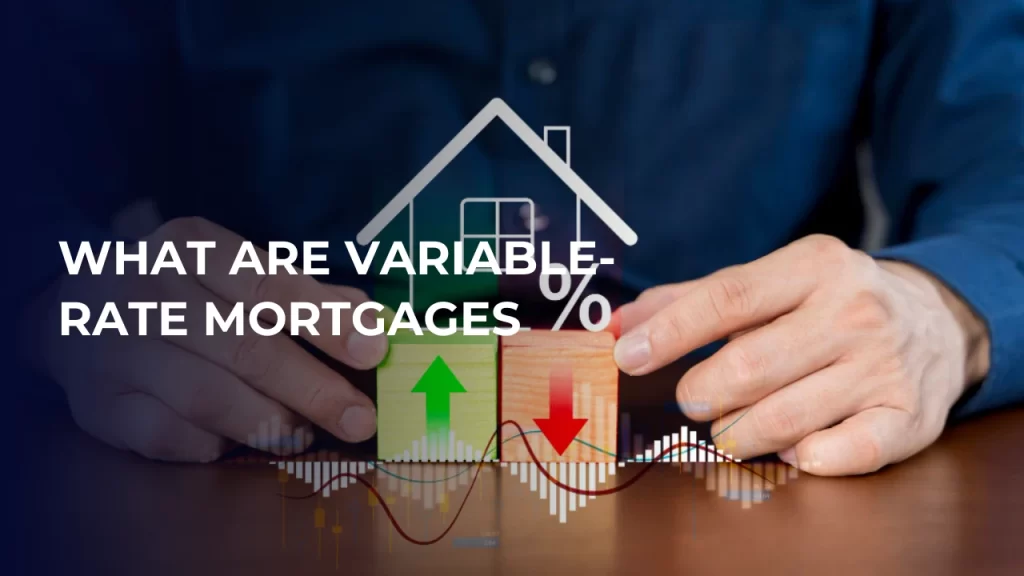
What Are Variable-Rate Mortgages
As its name suggests, it is a type of home loan where the interest rate and the amount you pay each month are not fixed. The monthly payment can increase or decrease (variable) throughout the mortgage term due to changes in the interest rate. In short,
“Interest rate changes directly affect your monthly payment”
How Variable-Rate Mortgages Work
- Variable mortgages don’t have fixed monthly payments like fixed-rate mortgages. Because payments can rise or fall with changes in interest rates.
- The interest rate shifts when the market rate changes, such as the Bank of England base rate. However, a market rate change is not always required for the variable rate to change.
- When the rate changes, lenders recalculate your monthly payment based on the current interest rate and your remaining mortgage balance.
- Lenders are required to inform you in writing, usually at least one month in advance.

Types Of Variable Rate Mortgage
There are three types of variable mortgages, and each one works differently.
Tracker mortgage
A tracker mortgage, as the name suggests, tracks the BoE base rate and a percentage set by your lender (fixed margin). When the base rate moves, they automatically adjust the mortgage rate as well.
These tracker deals run for a fixed term, such as two or five years. Some tracker deals also have a ‘floor’, known as an interest rate collar. Some tracker deals have a “floor” (known as an interest rate collar), which sets the minimum rate you’ll pay. Even if the Bank of England base rate falls below this level, your rate stops at the collar. Read more about how Tracker Mortgage works in our guide.
| Pros | Cons |
| Rate follows the base rate | Payments can go up |
| Payments go down if the base rate drops | Harder to budget |
| Usually cheaper at the start | Must afford possible rate rises |
| Can predict changes from the BoE | Savings may be limited |
| Some deals let you switch to fixed | Not all deals have a rate cap |
Standard Variable Rate (SVR)
SVR is your lender’s basic mortgage rate that you move onto when introductory deals end. Each lender sets their own SVR and can change it at any time. It doesn’t have to follow the Bank of England base rate. That’s the reason this rate is usually much higher than fixed-rate deals or other mortgage products.
Some SVRs can be up to 5% higher than the BoE rate. For example, in October 2025, the average SVR was 7.6%, while the two-year fixed rate averaged just 4.75%, and the five-year rate was around 4.98%.
| Pros | Cons |
| Flexibility to leave or switch deals at any time. | Rates are usually higher than those of other mortgages. |
| No limit on extra payments. | The lender can change the rate at any time. |
| Often, there is no Early Repayment Charge. | Changes in the rate can suddenly increase monthly payments. |
| Low SVR can mean lower monthly payments. | – |
Discounted Variable Rate Mortgages
It is a type of variable mortgage where the interest rate is set below the lender’s Standard Variable Rate. It’s sometimes called a discounted variable mortgage. It offers a discount for a set period of two or three years. For example, if SVR is 6% and you have a 2% discount, you’ll have to pay 4%.
While your discount percentage stays fixed, the lender can change the SVR at any time. they controls when and how much the SVR moves up or down. This means your monthly payments still vary even with a discount.
Lenders set different SVR rates, which is why a big discount doesn’t mean you’ll always pay a lower monthly payment. So, it’s better to research market rates and shop around with many lenders.
For example, Bank A offer 2.5% discount on the SVR of 6%, so the rate you pay is 3.5%. On the other hand, you have to pay 3.4% if Bank B offers 1.8% discount on an SVR of 5.2%.
| Pros | Cons |
| Lower than the lender’s standard rate | Rates can change suddenly, which makes budgeting harder. |
| Payments can also go down if interest rates fall. | Some deals have a minimum rate, so payments can’t fall below a certain level. |
| Monthly payments start smaller. | Payments go up if the lender’s rate rises. |
Factors That Affect Variable-Rate Mortgage Payments
The monthly payment you pay depends on several factors, including:
- Mortgage Term
- Type of Mortgage
- Size of the deposit if you are gonna purchase a home
- Equity (value of home compared to what you owe), if you are remortgaging

Variable-Rate Mortgages Compared with Other Loan Types
If you are buying a home or remortgaging soon, it’s beneficial to compare variable mortgages with other loan types before starting a new property investment journey.
| Feature | Fixed Rate | Variable Rate | Tracker Rate |
| Interest rate | Fixed for a set period | Can change at the lender’s discretion | Moves in line with the Bank of England base rate |
| Monthly payments | Stay the same | Can go up or down | Go up or down |
| Link to base rate | No | Usually influenced | Directly linked |
| Payment certainty | High | Medium | Low |

Compare and Find the Best Mortgage Deals
Lenders structure their mortgages in various ways and offer separate rates. This means even a small factor, if overlooked, can impact your finances. So here are some tips that will help you secure the best deals and secure your investment:
Check All Figures
An important factor in choosing between deals is to consider all terms, including interest rates, fees, and early exit penalties.
Compare More Than Just The Rate
Another factor to compare is the Annual Percentage Rate of Charge (APRC), which tells the total yearly costs of the mortgage. Lenders are required to state the APRC on a mortgage deal, so use it for comparison.
Consider Your Budget
Make sure the deal you choose is right for your financial situation. For Example, A lower rate with a fee may not save money at all. However, a no-fee deal may have a higher rate but could be better in the long term.
Conclusion/ Is a Variable Rate Mortgage Right for You?
Variable-rate mortgages offer flexibility, low initial costs, and savings options for homeowners who can handle sudden payment ups and downs due to interest rate changes. Whether you choose a tracker, SVR, or discount rate mortgage, your monthly costs move with interest rates. They can benefit immediately when rates drop. But they should also be prepared for potential rises, perhaps 2-3%.
FAQs
Most recently, the Bank of England has announced a base rate of 3.75%.
Yes, you can remortgage from SVR to a fixed rate at any time with no exit fees. However, switching from a tracker or discount deals may apply early repayment charges.
You automatically move to your lender’s standard variable rate when the tracker deal ends.
Variable-rate mortgages start with lower monthly payments than fixed deals. That’s why they are considered cheaper compared to other loans.
Tracker mortgages change in line with changes in the base rate. On the other hand, SVR and the discounted rate change with market conditions or the lender’s decision.
On a 30-year mortgage at 7%, your monthly payment would be about £2,662.
Your monthly payment would be about £3,327.
Our Agents

Adil Saleem

Qaiser Masood

Rizwan Ashraf
Leave a Reply